
As pulsed laser cleaning technology continues to develop, more industrial users are considering machines with higher output power. While 300W pulsed laser cleaning machines remain a common choice for general cleaning tasks, 500W and 1000W models are attracting growing attention from manufacturers that need higher productivity.
But does a 1000W pulsed laser cleaning machine always clean twice as fast as a 500W model? Is the additional investment worthwhile for your application?
The answer depends on the material, contaminant, cleaning requirements, and working conditions. In this article, Rayno Laser compares 500W and 1000W pulsed laser cleaning machines, including results from a practical cleaning test, to help you make a more informed decision.
1. What Is the Difference Between 500W and 1000W Pulsed Laser Cleaning Machines?
The most obvious difference is output power. A 1000W machine provides a higher average laser output than a 500W model, giving it greater potential for handling demanding cleaning tasks and improving productivity.
However, laser cleaning performance is not determined by power alone. Other important parameters include:
- Pulse energy and pulse duration
- Repetition frequency
- Scanning speed and cleaning width
- Beam profile, such as Gaussian or flat-top
- Type and thickness of the contaminant
- Base material and its sensitivity to heat
When these parameters are properly matched to the application, higher power can help increase material removal rates and reduce processing time.
2. 500W vs. 1000W: Real Cleaning Test Results
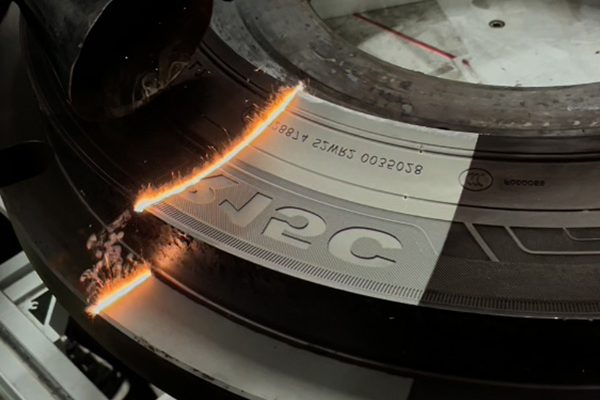
To better understand the performance difference, Rayno Laser conducted a comparison test using 500W and 1000W pulsed laser cleaning machines.
The test focused on cleaning under comparable conditions, using the same base material and contaminant type. By keeping the main testing conditions consistent, we could evaluate the difference in cleaning efficiency more objectively.
Test result: The 1000W pulsed laser cleaning machine achieved approximately twice the cleaning efficiency of the 500W model in this particular test.
This result demonstrates the productivity potential of higher-power pulsed laser cleaning technology.
It is important to note that this is a result from a specific test, not a universal rule. Actual cleaning efficiency may vary depending on the workpiece, coating thickness, surface condition, laser parameters, and required cleaning quality.
For a closer look at the process and results, watch the comparison video below.
500W Cleaning Video
1000W Cleaning Video
3. When Is a 500W Pulsed Laser Cleaning Machine a Good Choice?
A 500W pulsed laser cleaning machine is a practical option for users who need more cleaning capacity than a 300W model but do not necessarily require a 1000W system.
Typical applications include:
- Rust removal: Cleaning rust from metal components, equipment parts, and industrial workpieces.
- Paint and coating removal: Removing paint, coatings, and surface residues with suitable laser parameters.
- Mold cleaning: Removing release agents, residues, and other contaminants from molds.
- Industrial maintenance: Cleaning machine parts and metal surfaces during routine maintenance.
- Precision cleaning: Treating workpieces where controlling the impact on the base material is important.
For small and medium-sized workloads, 500W can offer a useful balance between cleaning capacity, equipment investment, and application flexibility.
4. When Should You Consider a 1000W or Higher-Power Model?
If your operation involves frequent cleaning, larger workpieces, or demanding production schedules, a 1000W pulsed laser cleaning machine may be worth considering.
Higher-power models can be particularly useful when:
- Cleaning volume is high and processing time is a major concern.
- Contaminants are difficult to remove under the existing process.
- Larger workpieces require more consistent production throughput.
- The machine will be used for extended industrial production.
- You are considering future automation or integration into a production line.
For manufacturers, the key question is not simply whether a higher-power machine costs more. It is whether the improvement in productivity can justify the investment over the equipment’s service life.
5. 500W vs. 1000W Pulsed Laser Cleaning Machine: Quick Comparison
| Comparison | 500W | 1000W |
|---|---|---|
| Output power | 500W | 1000W |
| Cleaning capacity | Suitable for many general industrial tasks | Greater potential for demanding and high-volume tasks |
| Productivity potential | Moderate to high, depending on application | Higher under suitable conditions |
| Typical users | Small and medium-sized manufacturers | Manufacturers with heavier workloads |
| Investment level | Lower | Higher |
| Best selection basis | Balanced cost and performance | Higher throughput and production efficiency |
The table provides general selection guidance. Actual performance and equipment configuration should be evaluated against your specific cleaning requirements.
6. Does Higher Laser Power Always Mean Better Cleaning?
No. Higher power does not automatically guarantee better cleaning quality.
For some precision applications, excessive energy input may affect the base material, especially when the workpiece is thin, delicate, or sensitive to heat.
A suitable pulsed laser cleaning process should balance:
- Contaminant removal efficiency
- Base-material protection
- Surface finish requirements
- Processing speed
- Repeatability and production consistency
For example, removing heavy rust from a robust steel component is different from cleaning a precision mold or a delicate metal surface. The appropriate laser power and parameters can be very different.
This is why sample testing is important before selecting a machine. A controlled test can help determine whether 500W is sufficient or whether a 1000W model offers a meaningful productivity advantage.
7. How to Choose the Right Pulsed Laser Cleaning Machine
Before purchasing a pulsed laser cleaning machine, consider the following questions:
1. What contaminants do you need to remove?
Rust, paint, oil, oxide layers, and mold residues may require different laser parameters.
2. What is the base material?
Stainless steel, carbon steel, aluminum, and other materials respond differently to laser energy.
3. How much cleaning work do you handle?
For occasional or moderate workloads, 300W or 500W may be sufficient. For more demanding production requirements, consider 1000W or higher.
4. What cleaning quality do you need?
If surface preservation is critical, the beam profile, pulse settings, and scanning configuration deserve as much attention as the rated power.
5. Have you tested your actual workpieces?
A sample test is one of the most reliable ways to compare cleaning speed, surface quality, and overall suitability.
8. Explore Rayno Laser 500W and 1000W Pulsed Laser Cleaning Machines
Rayno Laser offers pulsed laser cleaning solutions for different industrial cleaning requirements, including 300W, 500W, and 1000W configurations.
Whether you need a versatile machine for general industrial cleaning or a higher-power solution for more demanding workloads, the right configuration should be selected according to your workpieces and production goals.
If you are comparing 500W and 1000W pulsed laser cleaning machines, Rayno Laser can help evaluate your samples and recommend a suitable solution.
Contact Rayno Laser to discuss your application or arrange a sample cleaning test.
Frequently Asked Questions
Is a 1000W pulsed laser cleaning machine twice as fast as a 500W machine?
Not necessarily. In one Rayno Laser comparison test, the 1000W model achieved approximately twice the cleaning efficiency of the 500W model under the tested conditions. Actual results depend on the material, contaminant, and laser parameters.
Is 500W enough for industrial laser cleaning?
For many industrial applications, yes. A 500W pulsed laser cleaning machine can handle rust removal, coating removal, mold cleaning, and other tasks when properly configured. The best choice depends on workload and cleaning requirements.
What is the advantage of a 1000W pulsed laser cleaning machine?
Its higher output power provides greater potential for improving cleaning productivity, especially in demanding or high-volume applications. It may help reduce processing time when the workpiece and cleaning parameters are suitable.
Should I choose 500W or 1000W?
Choose 500W if you need a balance between cleaning capacity and equipment investment. Consider 1000W if your workload is heavier and productivity is a major priority. Testing your actual workpieces is the best way to make the final decision.