
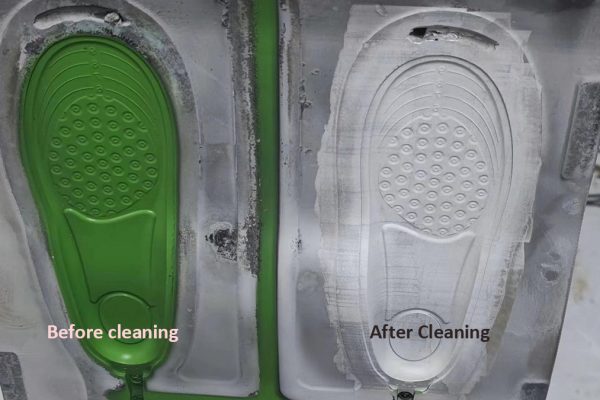
Pulsed laser cleaning technology has developed rapidly in recent years. As more manufacturers discover the advantages of laser cleaning, its applications are expanding across metal fabrication, automotive manufacturing, mold maintenance, machinery production, and industrial surface preparation.
Among the available power options, 300W pulsed laser cleaning machines have become a popular choice for many industrial users. They offer a practical balance between cleaning performance, equipment investment, and application flexibility.
However, customer requirements are changing. Many businesses are no longer looking only for a machine that can remove rust or paint. They also want higher cleaning efficiency, faster processing, and greater production capacity.
This is one reason why 500W pulsed laser cleaning machines are attracting increasing attention, while 1000W and even higher-power pulsed laser systems are creating more possibilities for demanding industrial applications.
At Rayno Laser, we see this development as an important direction for the laser cleaning industry: moving from basic cleaning capability toward higher productivity, more flexible process control, and increasingly advanced industrial applications.
1. Why Have 300W Pulsed Laser Cleaning Machines Become So Popular?
For many businesses entering the laser cleaning market, a 300W pulsed laser cleaner is a practical starting point.
Pulsed laser cleaning uses short laser pulses to remove unwanted surface materials such as rust, paint, oxide layers, oil, and other contaminants. With appropriate parameter settings, it can provide controlled cleaning while reducing excessive heat accumulation on the substrate.
Compared with some traditional cleaning methods, laser cleaning offers several advantages:
- Non-contact cleaning without abrasive blasting against the workpiece.
- Reduced reliance on chemical cleaning agents.
- Adjustable laser parameters for different cleaning requirements.
- Suitability for precision cleaning applications.
- Flexible operation for maintenance and localized cleaning tasks.
A 300W pulsed laser cleaning machine can handle many everyday cleaning jobs, including localized rust removal, selected paint stripping, mold maintenance, and cleaning of industrial components.
For small and medium-sized workshops, equipment maintenance teams, and businesses with moderate cleaning workloads, 300W can provide a suitable balance between investment and performance.
This explains why 300W has become an important power option in the pulsed laser cleaning market.
However, being suitable for many applications does not mean it is the best choice for every production requirement.
As cleaning workloads increase, some customers begin to look for more powerful equipment.
2. Why Is Demand for 500W Pulsed Laser Cleaning Machines Increasing?
As laser technology continues to improve, the performance and availability of higher-power pulsed laser sources have also developed.
At the same time, industrial customers are becoming more focused on productivity.
A machine that performs well for occasional maintenance may not provide enough capacity for a factory handling larger workpieces, more frequent cleaning tasks, or batch production.
This is where a 500W pulsed laser cleaning machine becomes an attractive upgrade.
Higher power, greater cleaning capacity
Compared with a 300W model, a 500W pulsed laser cleaning machine offers higher rated average laser power. Depending on the laser source and process configuration, this can provide greater cleaning capacity and help improve processing efficiency.
For businesses handling rust removal, paint removal, and industrial surface preparation, a 500W machine may offer a better balance between cleaning performance and production requirements.
More suitable for increasing workloads
A 500W laser cleaner is worth considering when customers experience situations such as:
- Cleaning areas becoming larger.
- Daily cleaning workloads increasing.
- More workpieces needing to be processed in a limited time.
- Existing equipment taking too long to complete certain jobs.
- Customers expecting faster turnaround for industrial cleaning projects.
Instead of immediately moving to a much larger industrial system, upgrading from 300W to 500W may be a practical next step.
An upgrade in productivity, not just a specification
The real value of a higher-power laser cleaning machine is not simply the number printed on its specification sheet.
For industrial buyers, the more important questions are:
- How much cleaning area can the machine process per hour?
- Can it remove the required coating more efficiently?
- Can it maintain the required surface quality?
- Is it suitable for continuous daily operation?
- Does the additional investment improve overall production efficiency?
These questions should guide the selection of a 500W pulsed laser cleaning machine.
3. What Can a 500W Pulsed Laser Cleaning Machine Do?
A 500W pulsed laser cleaner can be considered for a wide range of industrial surface-cleaning applications.
Rust removal from metal surfaces
Rust removal is one of the most common applications of laser cleaning machines.
A 500W pulsed laser cleaner can be evaluated for removing rust and oxidation from metal components, machinery parts, tools, and fabricated workpieces.
For businesses handling medium-sized or larger cleaning workloads, the additional power may help improve processing capacity compared with lower-power equipment.
Paint and coating removal
Paint removal often requires more cleaning energy than removing light surface contamination. The actual difficulty depends on coating thickness, adhesion, composition, and substrate material.
A 500W pulsed laser cleaning machine provides another option for customers who need to remove suitable paint and coating layers from metal surfaces.
For thick or strongly adhered coatings, sample testing is important to determine the appropriate power level and cleaning parameters.
Mold cleaning and precision maintenance
Mold cleaning is another important application of pulsed laser technology.
Injection molds, rubber molds, and other industrial tooling can accumulate carbon deposits, release-agent residues, oil, and production contaminants.
Because pulsed laser cleaning delivers energy in short pulses, it can be configured for controlled cleaning with reduced heat accumulation under suitable conditions.
This makes it worth evaluating for applications where surface details, mold textures, and the original surface condition need to be considered.
Industrial equipment and component maintenance
A 500W pulsed laser cleaning machine can also be evaluated for cleaning:
- Machinery components and industrial tooling.
- Metal parts before welding or coating.
- Selected oxide layers and surface contaminants.
- Automotive and mechanical components.
- Production equipment requiring periodic maintenance.
The final cleaning result depends on the substrate, contamination, laser parameters, and required surface finish. Testing representative samples is recommended before production use.
4. Why Are 1000W and Higher-Power Pulsed Laser Cleaning Machines Becoming Important?
As industrial cleaning requirements continue to grow, some customers need more than the capacity offered by 300W or 500W equipment.
For example, companies handling large workpieces, batch production, heavy industrial maintenance, or high-volume surface preparation may prioritize cleaning throughput over the lowest initial equipment cost.
For these applications, 1000W and higher-power pulsed laser cleaning machines deserve consideration.
Higher cleaning throughput for demanding applications
A higher-power laser source can provide more average laser power for the cleaning process. When the laser parameters and scanning configuration are properly matched to the application, this may help increase cleaning speed or expand the range of workable cleaning conditions.
Typical applications worth evaluating include:
- Large-area metal rust removal.
- Industrial paint and coating removal.
- Batch cleaning of manufactured components.
- Heavy machinery maintenance.
- Shipbuilding and industrial equipment maintenance.
- Production environments with demanding cleaning schedules.
However, higher power does not automatically mean better results in every situation.
The actual performance depends on pulse energy, pulse duration, repetition frequency, beam profile, scanning width, coating characteristics, and substrate requirements.
A precision cleaning task may require a different configuration from a large-area rust-removal project.
More opportunities for automation
Higher-power pulsed laser cleaning systems may also be considered for automated applications.
For businesses seeking consistent processing, laser cleaning equipment can be evaluated for integration with robotic arms, motion systems, and production lines.
Automation can help improve process repeatability and reduce dependence on manual operation, especially when the workpiece geometry and cleaning path are suitable for automated handling.
For these applications, the machine configuration should be designed around the actual production process rather than selecting laser power alone.
5. 300W vs. 500W vs. 1000W: Which Pulsed Laser Cleaner Should You Choose?
There is no single power level that is suitable for every customer. The right machine depends on the cleaning task, daily workload, workpiece size, coating characteristics, and investment budget.
The following table provides a general selection reference.
| Comparison | 300W Pulsed Laser Cleaner | 500W Pulsed Laser Cleaner | 1000W Pulsed Laser Cleaner |
|---|---|---|---|
| Typical positioning | General industrial and maintenance cleaning | Higher-capacity industrial cleaning | Higher-throughput industrial cleaning |
| Rust removal | Suitable for many applications | Greater capacity potential | Suitable for demanding workloads |
| Paint removal | Depends on coating and thickness | More capacity for suitable coatings | Worth evaluating for larger or more demanding projects |
| Mold cleaning | Suitable for selected precision tasks | Suitable with appropriate parameter control | Requires careful application testing |
| Cleaning workload | Light to moderate | Moderate to higher | Higher-volume applications |
| Main buying priority | Cost and flexibility | Balance of productivity and investment | Throughput and production capacity |

Which power level is right for your business?
Choose 300W if:
- Your cleaning workload is relatively small.
- You mainly handle localized cleaning and maintenance.
- You need a practical entry-level pulsed laser cleaning machine.
- Your budget is limited and production speed is not the main concern.
Choose 500W if:
- Your daily cleaning workload is increasing.
- You need more cleaning capacity than a 300W machine can provide.
- You regularly remove rust, paint, and other contaminants from metal components.
- You want to improve productivity without immediately investing in a much larger system.
Choose 1000W or higher if:
- You handle large workpieces or higher-volume cleaning projects.
- Cleaning speed is a major production consideration.
- You need greater processing capacity for industrial applications.
- You are evaluating robotic or automated laser cleaning solutions.
These recommendations are general guidelines. The final selection should be based on actual sample tests and the required cleaning quality.
6. What Is Driving the Development of Higher-Power Pulsed Laser Cleaning?
The growing interest in 500W and higher-power pulsed laser cleaning machines reflects several changes in industrial manufacturing.
1. Increasing demand for production efficiency
Manufacturers want to complete more work within the same production schedule. Cleaning is often part of a larger manufacturing process, so reducing cleaning time can help improve overall workflow efficiency.
2. More demanding surface preparation requirements
Modern manufacturing requires controlled surface conditions before welding, coating, bonding, or other processes.
Customers increasingly look for cleaning solutions that combine effective contaminant removal with control over the underlying material.
3. Wider acceptance of laser cleaning technology
As more businesses gain experience with laser cleaning, they are becoming familiar with its advantages and limitations.
This makes it easier for customers to consider laser cleaning not only for specialized applications but also for regular industrial maintenance and production processes.
4. Continuous improvement in laser sources and equipment design
Advances in laser sources, optical systems, control technology, and cleaning-head design are creating more options for industrial users.
Higher-power equipment is becoming an increasingly important part of this development, giving customers more choices when upgrading their cleaning capacity.
The direction is clear: customers are looking for laser cleaning machines that are not only capable of removing contaminants, but also able to meet increasingly demanding productivity and application requirements.
7. Rayno Laser: Pulsed Laser Cleaning Solutions from 300W to 1000W
At Rayno Laser, we provide pulsed laser cleaning solutions for different industrial applications and customer requirements.
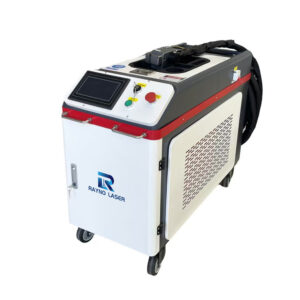
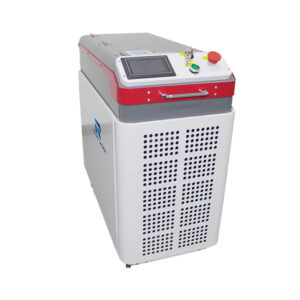
Our product range includes 300W, 500W, and 1000W pulsed laser cleaning machines, allowing customers to choose a suitable power level according to their cleaning workload and production goals.
300W Pulsed Laser Cleaning Machine
A practical option for customers handling general cleaning, localized rust removal, selected paint removal, and maintenance applications.
500W Pulsed Laser Cleaning Machine
Designed for customers looking for greater cleaning capacity and improved productivity. It offers an attractive option for businesses upgrading from lower-power pulsed laser cleaners.
1000W Pulsed Laser Cleaning Machine
A higher-power solution for customers evaluating more demanding cleaning workloads and higher production throughput.
The Rayno Laser RN-HC series also offers configuration options to suit different applications. Depending on the model, customers can evaluate different field lenses, scanning ranges, and other process configurations.
Rather than recommending the highest-power machine to every customer, our goal is to help you identify the most suitable laser cleaning solution for your actual workpieces.
8. How Can You Choose the Right Laser Cleaning Machine?
Before purchasing a pulsed laser cleaning machine, consider the following questions:
- What material are you cleaning: carbon steel, stainless steel, aluminum, or another substrate?
- What do you need to remove: rust, paint, oxide, oil, carbon deposits, or other contamination?
- How thick is the coating or contamination layer?
- What is the size and geometry of the workpiece?
- How much cleaning area do you need to process per day?
- Is substrate protection or precision cleaning a major requirement?
- Will the machine be used manually or integrated into an automated production process?
These details are more useful for equipment selection than rated power alone.
Rayno Laser provides sample testing to help customers evaluate suitable power levels and cleaning configurations.
You can send us your workpiece samples or provide clear photos and application details. Our technical team can help evaluate the cleaning result and recommend a suitable machine.
Conclusion: The Future of Pulsed Laser Cleaning Is Moving Toward Higher Productivity
300W pulsed laser cleaning machines remain a practical choice for many industrial users. They offer a suitable solution for general cleaning and maintenance applications.
However, as production requirements increase and laser technology continues to develop, the demand for 500W pulsed laser cleaning machines is also growing.
For customers who need even greater cleaning capacity, 1000W and higher-power systems provide additional options for demanding industrial applications.
The important point is not simply to choose a machine with more watts. It is to select a laser cleaning system that delivers the right combination of cleaning quality, processing efficiency, substrate protection, and investment value.
Explore 300W, 500W, and 1000W pulsed laser cleaning machines from Rayno Laser.
Contact our team today to discuss your application, request a sample cleaning test, or find the right laser cleaning solution for your business.