
Can One Laser Machine Handle Cleaning, Marking, and Surface Restoration?
A More Flexible Approach to Industrial Surface Processing
Manufacturers and surface-treatment businesses often face more than one type of processing requirement. A metal component may need rust removal before production, a serial number after processing, and occasional surface restoration during maintenance.
Traditionally, these jobs may require different machines, separate workstations, and additional equipment investment.
But what if one laser system could handle several of these tasks?
With advances in pulsed laser technology and integrated laser processing systems, multifunctional equipment is becoming an interesting option for businesses looking to expand their processing capabilities without building an entirely separate workstation for every application.
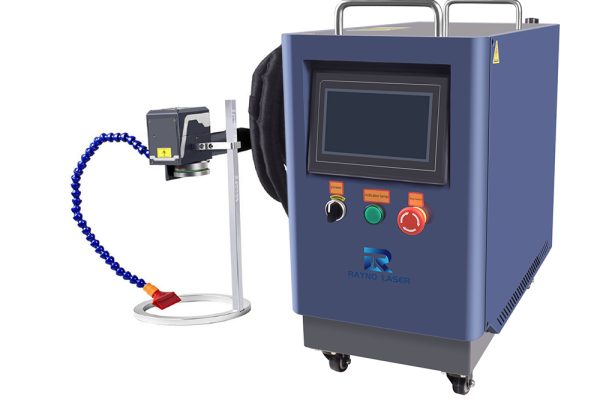
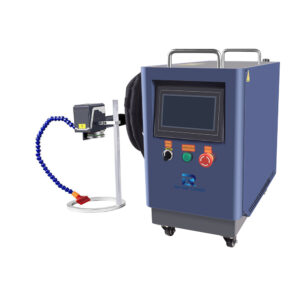
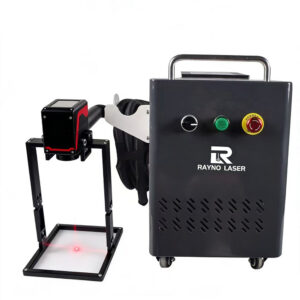
The Rayno Laser 500W Pulsed Laser Cleaner is one example. It combines laser cleaning and laser marking in one system, with additional features such as real-time focus sensing, multiple scanning patterns, mobile APP control, and PC remote monitoring.
This article explores how multifunctional laser processing can support different industrial workflows and what businesses should consider before choosing a 2-in-1 laser cleaning and marking machine.
1. Why Are Businesses Looking Beyond Single-Function Laser Machines?
A single-function machine may be sufficient when a business performs the same operation every day. However, companies handling different workpieces or customer orders often need more flexibility.
Consider a metal fabrication workshop.
A typical workflow might include:
- Removing rust, oxidation, or old coatings from incoming components.
- Cleaning selected areas before subsequent processing.
- Marking serial numbers, logos, or identification codes.
- Performing maintenance or restoration on existing components.
If each task requires a separate machine, the business needs to manage more equipment, workstations, and operating procedures.
A multifunctional laser system offers another approach by combining compatible processing functions in one equipment platform.
For small and medium-sized manufacturers, industrial maintenance teams, and processing service providers, this can create opportunities to handle more types of customer requirements with a more flexible equipment setup.
2. Cleaning and Marking: Two Processes That Complement Each Other
Laser cleaning and laser marking serve different purposes, but they can be closely connected in manufacturing.
Laser Cleaning: Prepare the Surface
Before a component is welded, assembled, refurbished, or processed further, its surface may need to be cleaned.
Common contaminants include:
- Rust and oxidation
- Paint and protective coatings
- Oil and grease
- Manufacturing residues
- Surface dirt and deposits
Laser cleaning removes unwanted surface layers through controlled laser irradiation. Pulsed laser technology is particularly useful when the process requires careful control of energy input and surface treatment.
Laser Marking: Add Identification Information
Once a component is cleaned or processed, it may need permanent identification.
Laser marking can be used for:
- Product serial numbers
- Company logos
- Part numbers
- QR codes and identification codes
- Manufacturing information
- Text and graphic symbols
Combining these two functions creates a practical workflow: prepare the surface first, then mark the component when required.
Why Does a 2-in-1 System Matter?
A 2-in-1 laser cleaning and marking machine integrates both functions into one system with a shared handheld head.
For businesses that regularly perform both processes, this can reduce the need to purchase separate equipment and simplify the overall equipment arrangement.
It also creates additional service opportunities for companies that provide custom metal processing, maintenance, and restoration services.
Related Products
3. Why Focal Distance Matters in Laser Cleaning and Marking
One often-overlooked factor in handheld laser processing is the distance between the laser head and the workpiece.
Even when the laser power and processing settings are correct, an unsuitable focal position can affect the working result.
For operators, maintaining the correct distance can be challenging when dealing with:
- Large components
- Curved surfaces
- Irregular workpieces
- Different material thicknesses
- Repeated processing across multiple areas
Traditional manual positioning relies heavily on operator experience and working procedures.
Real-Time Focus Sensing Makes Positioning More Convenient
The Rayno Laser 500W system incorporates a real-time focus sensor in the cleaning head.
Instead of relying entirely on visual estimation, operators can check the focal-distance information displayed by the sensor.
This provides useful feedback when positioning the head and establishing a suitable working distance.
For businesses handling different workpieces, this feature can help make positioning more consistent and reduce unnecessary trial and error.
It is important to understand that a focus sensor providing distance feedback is not the same as an automatic autofocus system. Operators still need to position the head appropriately.
4. Different Workpieces Need Different Scanning Strategies
A large flat steel plate, a narrow metal component, and a small localized rust spot present different cleaning challenges.
Using the same scanning pattern for every job may not always be the most practical approach.
For example:
- Large surfaces may benefit from scanning patterns designed to cover a wider area.
- Narrow or elongated areas may require a more suitable directional pattern.
- Localized contamination may need a more concentrated scanning area.
- Marking tasks require scanning settings appropriate for the intended graphic or text.
The Rayno Laser 500W system supports up to 11 selectable scanning patterns.
This gives operators more options when matching the scanning path to the workpiece and processing task.
The important point is not simply the number of available patterns. It is the ability to choose a suitable scanning strategy for different jobs.
The final cleaning or marking result still depends on the laser parameters, workpiece geometry, material, and required quality.
5. Can Laser Cleaning Be Used for Non-Metal Restoration?
Laser cleaning is commonly associated with metal rust removal and paint stripping. However, selected non-metal materials can also be considered for laser-based surface restoration.
This creates additional opportunities for businesses working in restoration, maintenance, construction, and specialized surface treatment.
Wood Restoration
Wood surfaces may accumulate paint, stains, soot, or other unwanted layers over time.
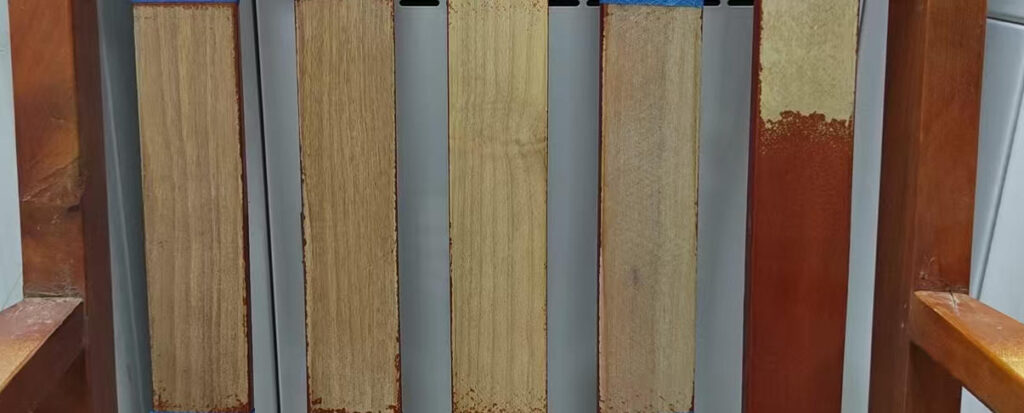
Laser treatment can be evaluated for selected wood restoration tasks where removing surface contamination while retaining visible grain details is important.
However, wood type, moisture content, coating composition, and laser parameters all influence the result. Excessive laser energy may cause discoloration or charring.
Rubber Surface Cleaning
Rubber components may accumulate dirt, residues, or unwanted surface deposits during use.
Laser cleaning can be evaluated for selected rubber cleaning applications, but rubber formulations vary considerably. Testing is necessary to determine whether contaminants can be removed without affecting the underlying material.
Stone and Brick Restoration
Stone and brick surfaces are commonly encountered in architectural restoration and maintenance projects.
Potential applications include removing selected surface stains, deposits, and unwanted coatings.
Different stone types, porosity levels, and surface conditions require different processing approaches. Laser treatment should be tested carefully, especially on historic or valuable surfaces.
A Broader Range of Potential Applications
The ability to evaluate both metal and non-metal workpieces gives multifunctional laser cleaning systems a wider potential application range.
However, material compatibility should never be assumed based on appearance alone. A successful process on one type of wood, rubber, or stone does not guarantee the same result on another.
For valuable restoration projects, sample testing and process evaluation are particularly important.
6. Mobile APP Control and Remote Monitoring: Bringing More Flexibility to Equipment Management
In modern industrial environments, equipment operation and equipment management are becoming increasingly connected.
Operators may work in different areas, while supervisors need to check equipment status without always being physically next to the machine.
Digital connectivity can help address these needs.
Mobile APP Control
Smartphone connectivity gives operators another way to access supported machine settings.
Depending on the system configuration, users can adjust available cleaning or marking parameters through the mobile APP.
This can be useful for field-service teams and operators who need flexible access to machine controls.
PC Remote Monitoring
For businesses managing multiple machines or work areas, PC remote monitoring provides an additional way to check available equipment operating information.
This can help supervisors monitor equipment status and make day-to-day management more convenient.
Mobile APP control and PC remote monitoring serve different purposes: the former provides a mobile operating interface, while the latter supports equipment supervision.
Together, they add digital connectivity to the laser processing workflow.
7. Is a Multifunctional 500W Pulsed Laser Cleaner Right for Your Business?
A multifunctional laser system is not necessarily the best choice for every company. Its value depends on how frequently you use each function and whether the combination fits your actual workflow.
Here are several situations where a 2-in-1 laser cleaning and marking machine may be worth considering.
| Business Type | Potential Value |
|---|---|
| Metal fabrication workshops | Surface cleaning and component identification |
| Machinery maintenance companies | Rust removal, surface preparation, and part marking |
| Mold manufacturers | Mold cleaning and component identification |
| Equipment restoration businesses | Cleaning and selected restoration applications |
| Custom processing service providers | More service options for different customer orders |
| Industrial manufacturers | Surface preparation and product identification |
Before purchasing, consider the following:
How often do you need both cleaning and marking?
If both processes are part of your regular workflow, an integrated system may provide more value than two separate machines.
What materials do you process?
Metal and non-metal applications have different requirements. Confirm compatibility through sample testing.
Do you need precise working-distance feedback?
The real-time focus sensor may be useful when operators frequently switch between workpieces with different shapes and dimensions.
How important is digital equipment control?
Mobile APP control and PC remote monitoring may be useful for field operations and businesses that need more flexible equipment supervision.
What is your daily workload?
A 500W pulsed laser cleaner should be evaluated according to your cleaning area, contaminant type, production volume, and required finish.
8. One Machine, More Processing Possibilities with Rayno Laser
For businesses looking to expand beyond conventional rust removal and surface cleaning, multifunctional laser equipment offers a different way to organize processing operations.
The Rayno Laser 500W Pulsed Laser Cleaner combines:
- 2-in-1 laser cleaning and marking
- Real-time focus sensing
- Up to 11 selectable scanning patterns
- Mobile APP control
- PC remote monitoring
- Applications across metal and selected non-metal surfaces
Rather than focusing on only one cleaning task, this system is designed to support businesses handling different processing requirements.
If you are considering laser cleaning for metal components, paint stripping, restoration, or integrated cleaning and marking, Rayno Laser can help evaluate your application.
Contact Rayno Laser to arrange a sample test and explore how one multifunctional laser system could fit into your production workflow.
Frequently Asked Questions
Can one laser machine perform both cleaning and marking?
Yes. A 2-in-1 laser cleaning and marking system integrates both functions into one equipment platform. This can be useful for businesses that need to clean workpieces and add identification information.
What is the advantage of a laser cleaning head with a real-time focus sensor?
It provides focal-distance information to help operators position the laser head correctly. This is useful when processing workpieces with different shapes and dimensions.
How many scanning patterns are available?
The Rayno Laser 500W system supports up to 11 selectable scanning patterns for different cleaning and marking requirements.
Can a pulsed laser cleaner restore wood and stone surfaces?
Selected wood and stone restoration applications can be evaluated using pulsed laser cleaning. The result depends on the material, surface condition, contaminant, and laser parameters. Sample testing is essential.
Can I control a laser cleaning machine remotely?
The Rayno Laser 500W model supports mobile APP connectivity and PC remote monitoring. Available control and monitoring functions depend on the system configuration.
Is a 2-in-1 laser cleaning and marking machine more cost-effective?
It may reduce the need to purchase separate cleaning and marking equipment if both functions are regularly required. The actual cost advantage depends on application frequency, equipment configuration, and production volume.